What Should Buyers Know Before Making Water Cups?
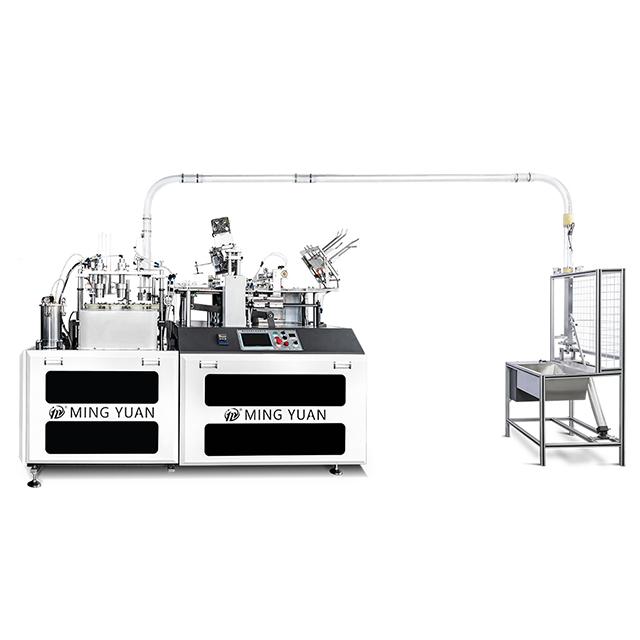
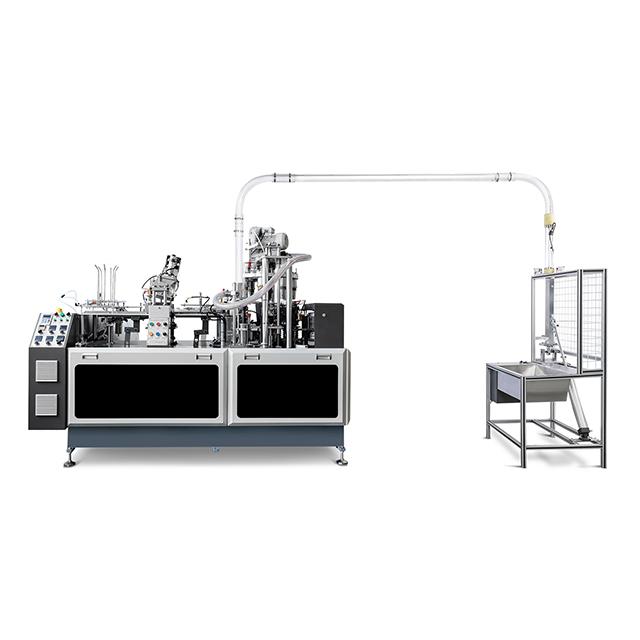
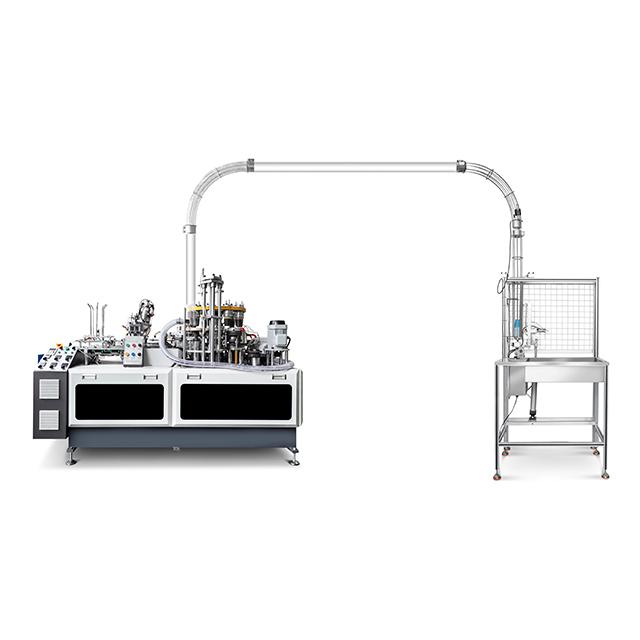
A water cups making machine should be selected for stable output, low waste, simple size control, and fast packing. Water cup orders often look easier than coffee cup orders because the design is usually plain and the cup structure is simple. In real production, however, the profit can be thin, so small losses in material, labor, packing, or rejected cups can quickly reduce margin.
For buyers comparing a water cup project with branded coffee cups, the business logic is different. Water cups usually rely on repeat volume, predictable sizes, fast delivery, and competitive unit cost. The machine decision should therefore focus on accepted output per shift, paper cup fan stability, packing speed, and delivery consistency.
A buyer can start with a suitable paper cup machine and ready paper cup fans if the first orders are plain water cups. The main goal is to produce saleable cups repeatedly at a controlled cost, not to buy every upstream and downstream process on day one.
Why Water Cup Orders Are Different from Coffee Cup Orders
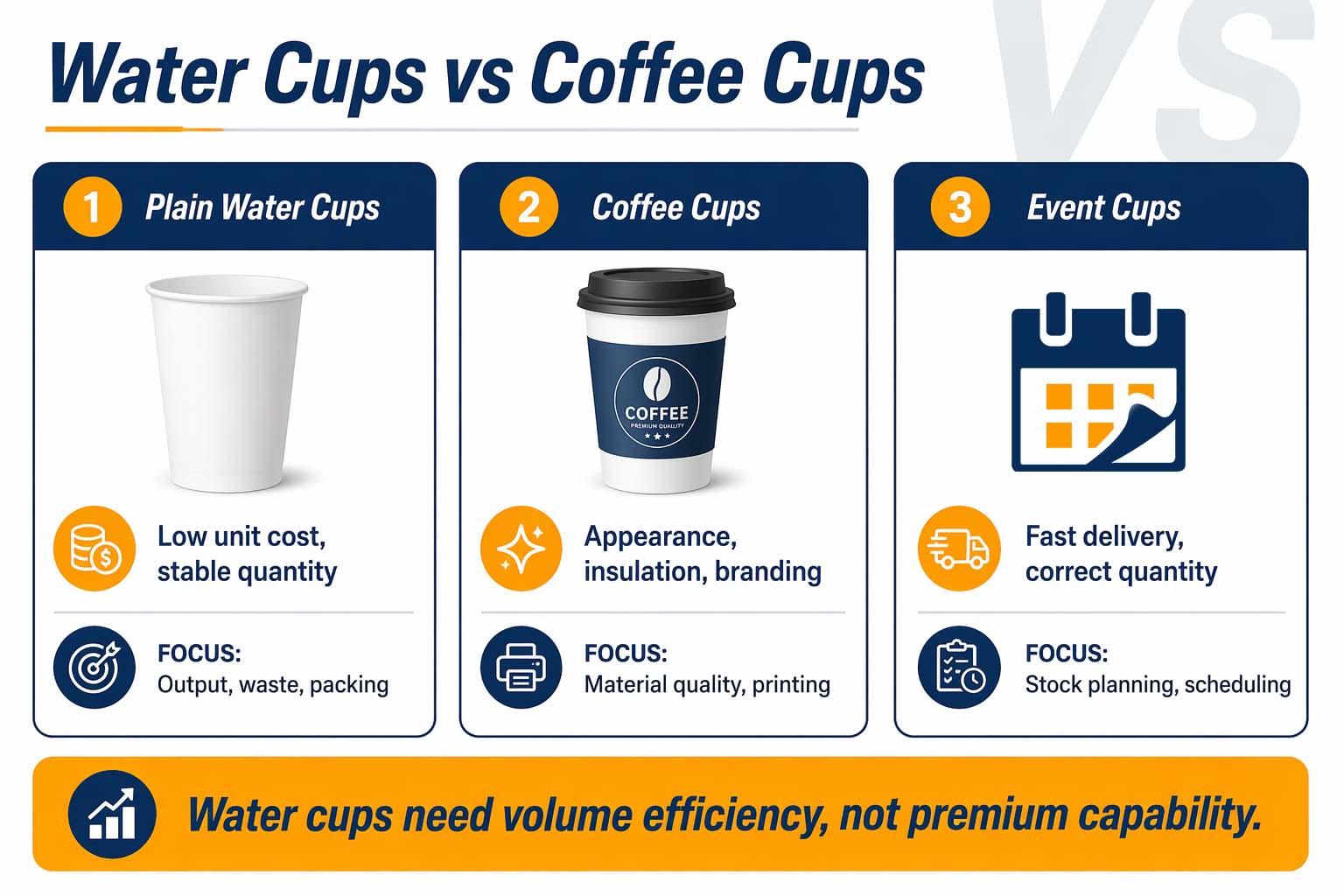
Water cups are often purchased by offices, events, schools, hospitals, factories, catering suppliers, and local distributors. The buyer may not pay extra for heavy paper, custom printing, or premium appearance. Instead, the customer usually wants stable quantity, reliable delivery, clean packing, and acceptable price.
|
Order Type
|
Typical Customer Priority
|
Factory Planning Focus
|
|
Plain water cups
|
Low unit cost and stable quantity
|
Output, waste control, packing efficiency
|
|
Coffee cups
|
Appearance, insulation, branding, cup feel
|
Material quality, printing control, cup stiffness
|
|
Event cups
|
Fast delivery and correct quantity
|
Stock planning, packing, and order scheduling
|
This difference affects equipment choice. For water cups, buyers should be careful with over-investment. A large setup may look efficient, but if local orders are not stable enough, unused capacity will increase pressure instead of improving profit.
Because water cups often compete on price, buyers should calculate profit before selecting the machine configuration. The formula should include usable paper cup fan cost, forming labor, packing cost, reject allowance, and overhead. If the buyer only checks the machine price, the real cost per saleable cup may be misunderstood.
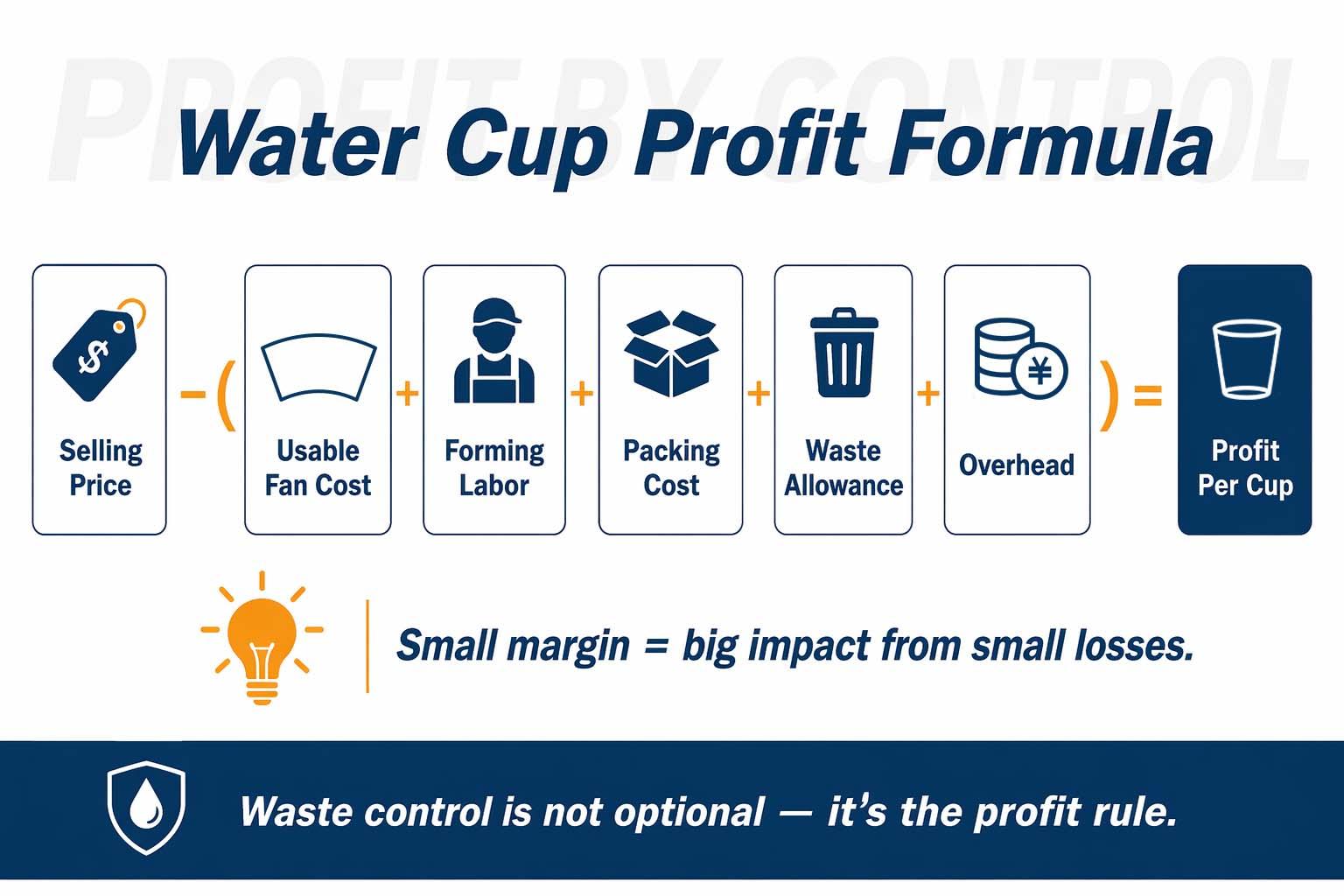
Water cup margin check
Profit per water cup = selling price - usable fan cost - forming labor - packing cost - waste allowance - overhead per cup
The smaller the margin, the more important stability becomes. If a factory loses cups through leakage, poor rim shape, wrong counting, or damaged stacks, the loss may be larger than expected. For low-margin water cups, waste control is not a technical detail; it is a profit rule.
What Machine Performance Matters Most?
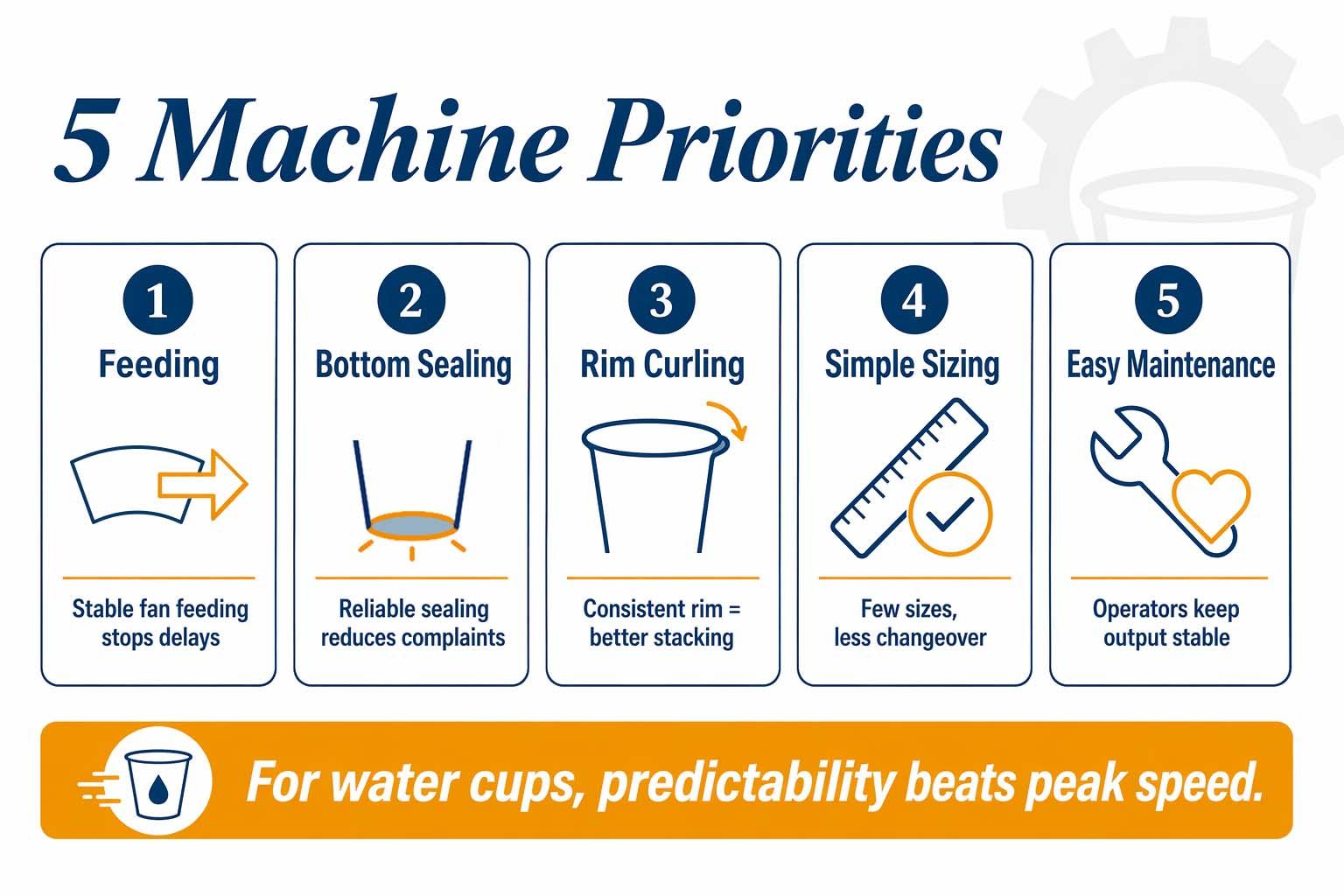
For water cups, buyers should not focus only on the highest possible speed. A water cup factory needs stable feeding, side sealing, bottom sealing, rim curling, cup discharge, and collection. The equipment should run predictably with the selected paper and cup size.
-
Stable paper cup fan feeding reduces stops and material damage.
-
Reliable bottom sealing reduces leakage complaints and inspection pressure.
-
Consistent rim curling improves stacking, packing, and customer acceptance.
-
Simple size planning reduces changeover time and operator mistakes.
-
Easy daily maintenance helps operators keep output stable across shifts.
How Paper Cup Fan Planning Controls Waste
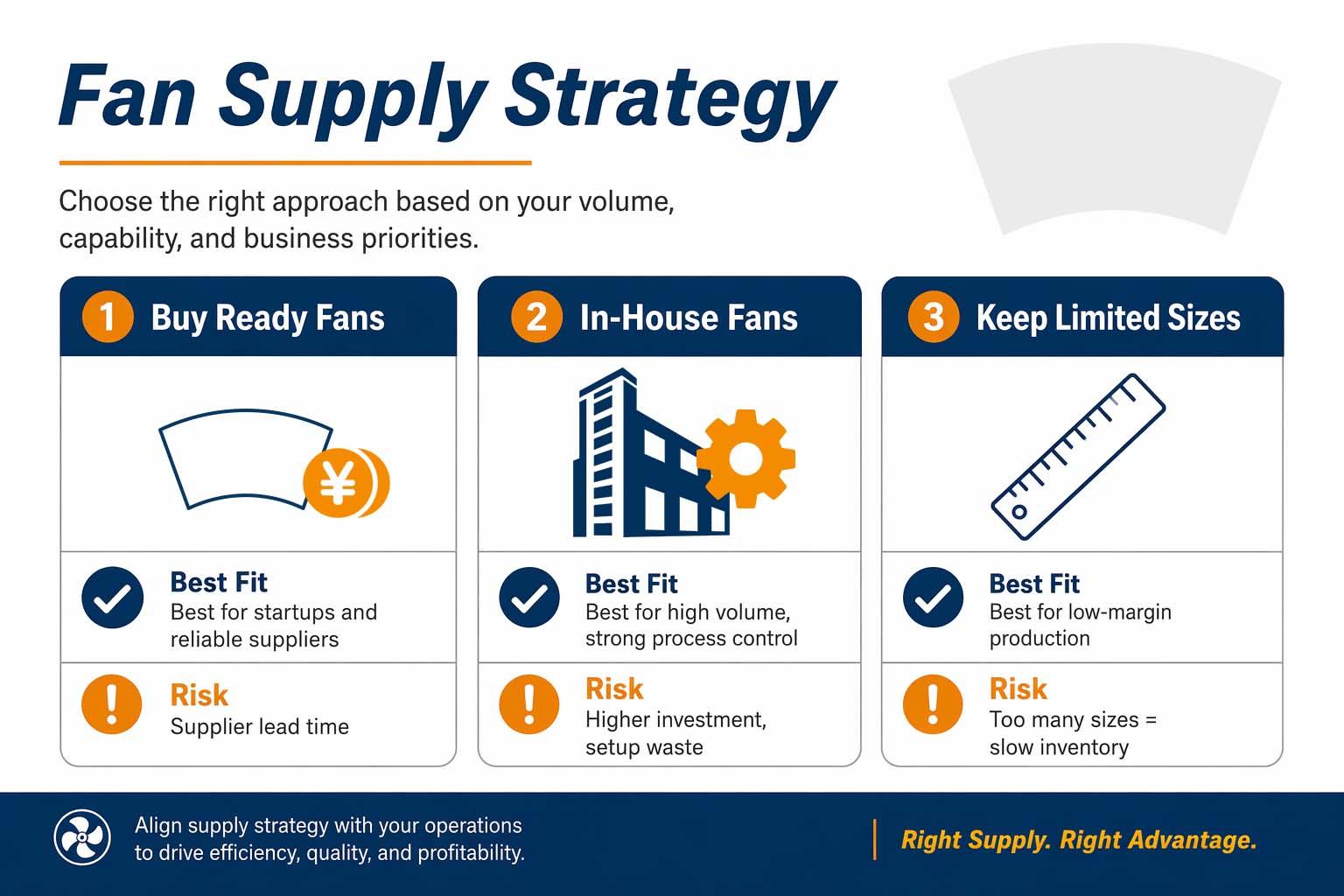
Water cup production usually benefits from simple material planning. The factory can start with ready paper cup fans if local fan supply is reliable. This reduces upstream complexity and helps the buyer focus on forming stability, packing, and sales. In-house printing and die cutting are not urgent unless the buyer has enough repeated volume or needs stronger control over fan cost and delivery.
|
Material Decision
|
Best Fit
|
Risk to Watch
|
|
Buy ready fans
|
Startup factory or stable local fan supplier
|
Supplier lead time and fan consistency
|
|
Prepare fans in-house
|
High repeated volume and strong process control
|
Higher investment, setup waste, and staff requirement
|
|
Keep limited sizes
|
Low-margin water cup production
|
Too many sizes can create slow-moving inventory
|
Why Packing Can Decide Water Cup Profit
Water cup orders are often delivered in larger quantities, so packing can become the real bottleneck. If workers spend too much time counting cups, correcting bag quantities, moving stacks, or preparing cartons, the forming machine's speed will not fully convert into sales.
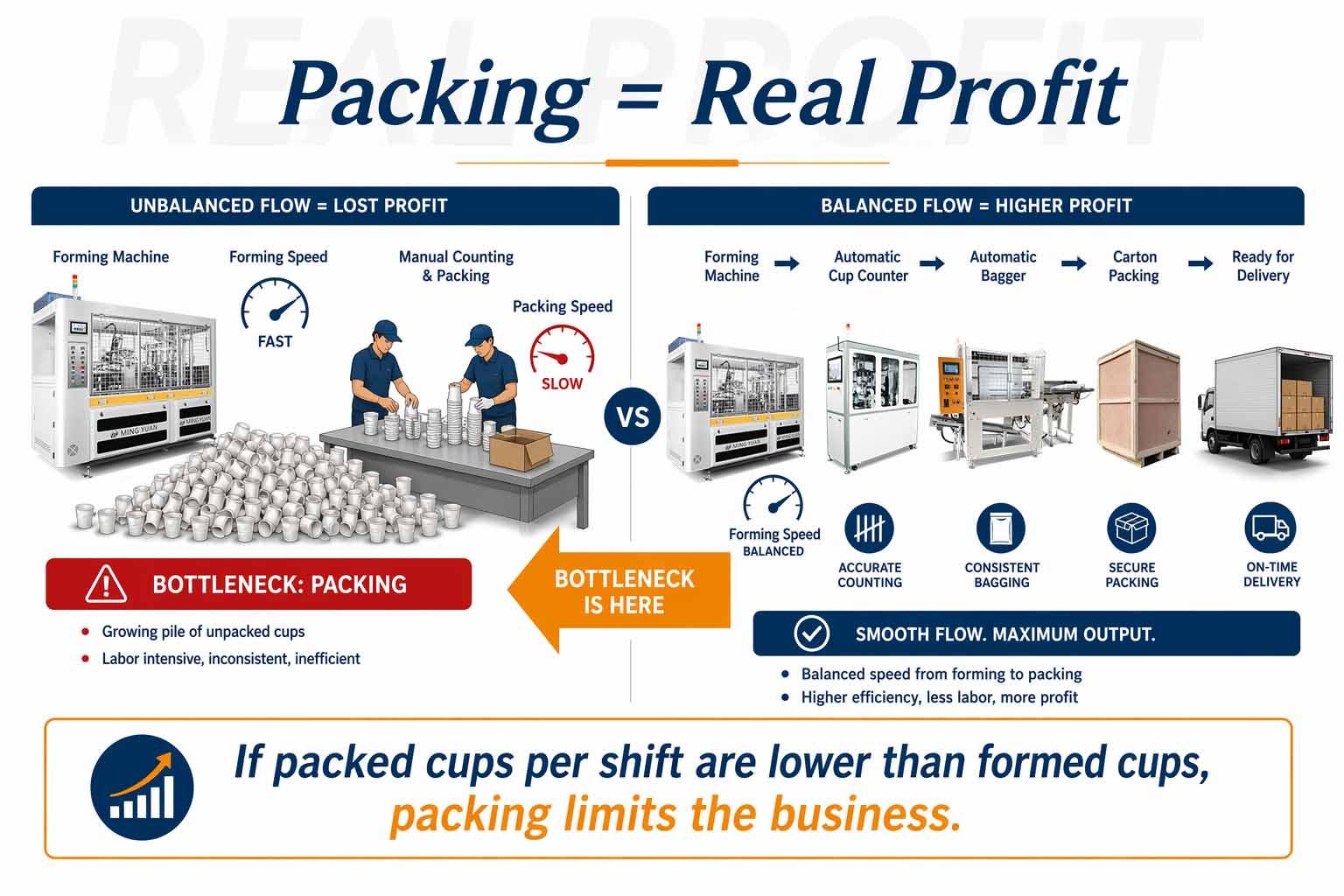
The factory should define cups per bag, bags per carton, carton labels, storage location, and delivery batches before production scales. If packed cups per shift are lower than accepted formed cups per shift, packing is limiting the business. In that situation, automatic counting, bagging, or better packing layout may be more useful than another forming machine.
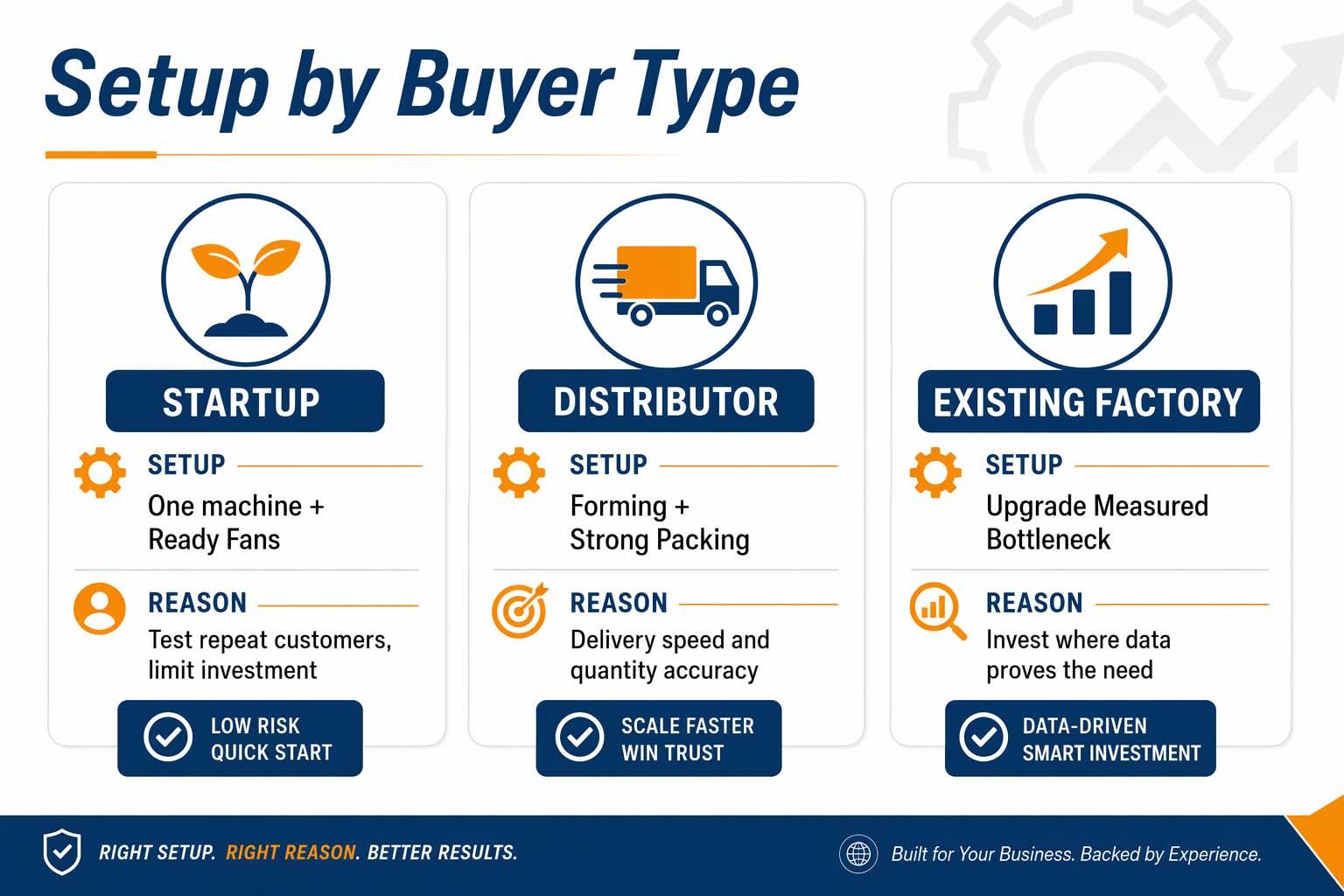
Which Setup Fits Different Buyer Situations?
|
Buyer Situation
|
Recommended Starting Setup
|
Main Reason
|
|
Startup with uncertain demand
|
One forming machine and ready fans
|
Limits investment while testing repeat customers
|
|
Distributor with repeat orders
|
Forming machine plus stronger packing process
|
Delivery speed and quantity accuracy matter most
|
|
Existing cup factory
|
Upgrade the measured bottleneck
|
The next investment should solve real production data
|
What Records Should a Water Cup Factory Keep?
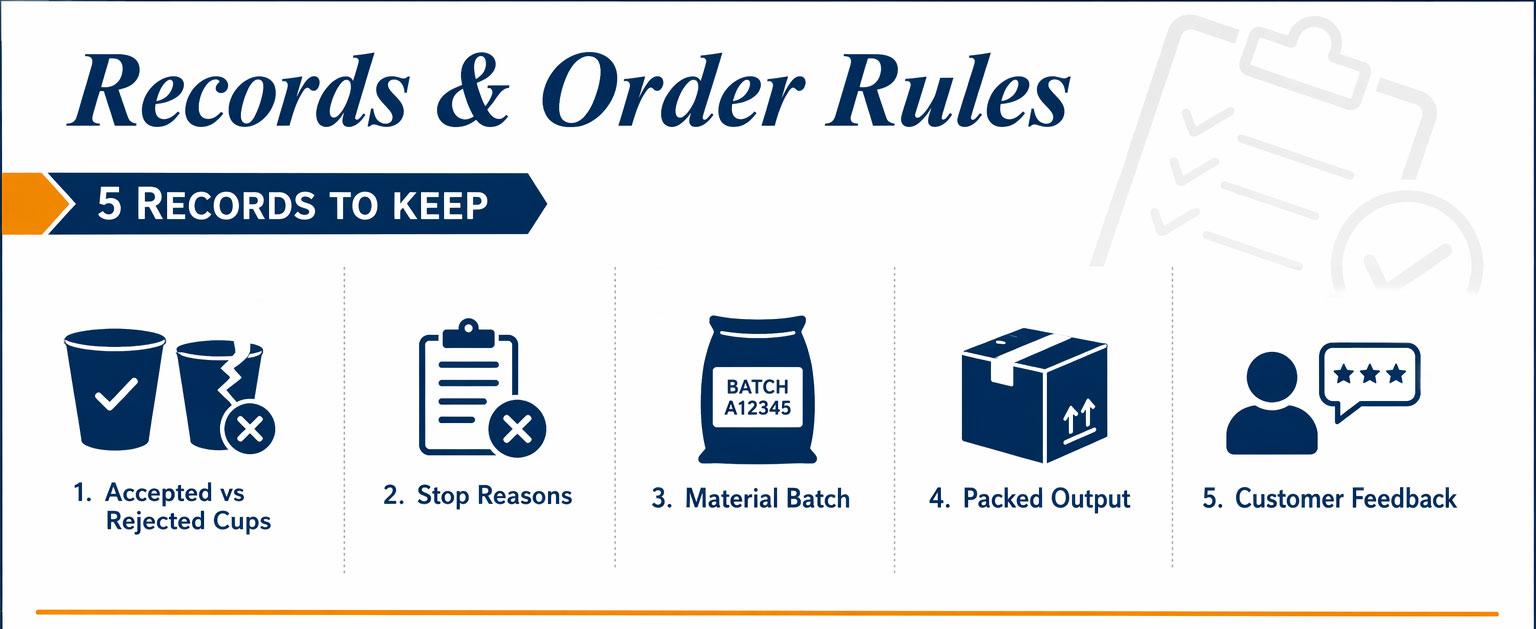
Water cup factories should record output, rejects, stops, material batches, packing quantities, and delivery results from the first week. These records show whether the next improvement should be material sourcing, operator training, packing automation, or another forming machine.
-
Accepted cups per shift and rejected cups per shift.
-
Main stop reasons, such as feeding, bottom paper, sealing, or collection issues.
-
Material batch and supplier for paper cup fans and bottom paper.
-
Packed bags and cartons per shift.
-
Customer complaints, delivery delays, and returned products.
How Order Policy Protects Low-Margin Production
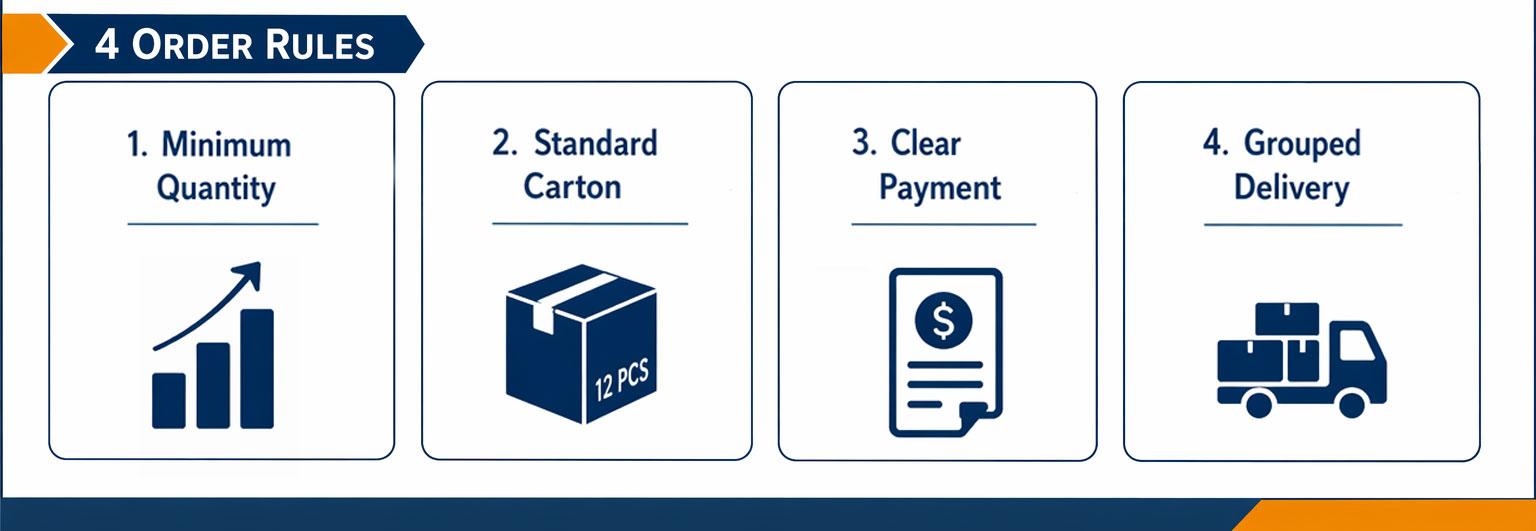
Water cup factories should create simple order rules before accepting many small customers. Low-margin products can lose money when orders are too small, sizes change too often, payment is delayed, or delivery schedules interrupt larger runs. A clear order policy protects machine time and material planning.
|
Order Rule
|
Why It Matters
|
Practical Benefit
|
|
Minimum quantity by size
|
Small runs increase changeover and handling cost
|
Protects effective production time
|
|
Standard bag and carton quantity
|
Random packing requests slow workers down
|
Improves packing speed and delivery accuracy
|
|
Clear payment terms
|
Paper and packing materials require cash before delivery
|
Reduces working-capital pressure
|
|
Grouped delivery schedule
|
Frequent urgent shipments interrupt production planning
|
Keeps production and packing more stable
|
For low-margin water cups, sales discipline is part of production efficiency. The factory should avoid accepting order terms that make the machine run less efficiently than the price can support.
Common Mistakes That Reduce Margin
-
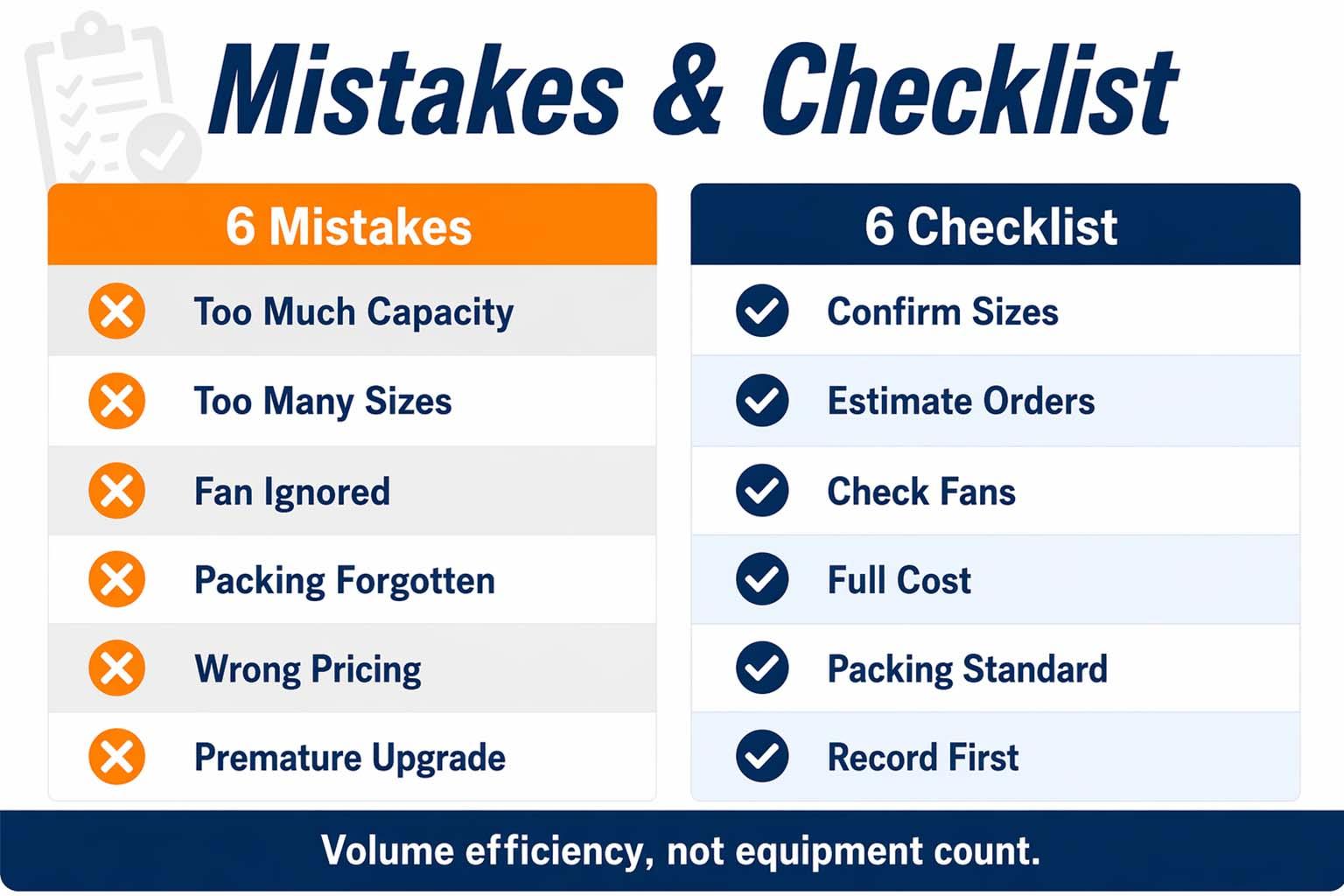
Buying too much capacity before repeat water cup orders are confirmed.
-
Choosing many sizes and increasing mold, fan stock, and changeover cost.
-
Ignoring paper cup fan consistency and blaming every defect on the machine.
-
Underestimating manual counting, bagging, sealing, and carton preparation.
-
Accepting low prices without calculating reject rate and packing labor.
-
Expanding upstream printing or die cutting before water cup volume is stable.
Pre-Purchase Checklist
-
Confirm whether local buyers need 3 oz, 4 oz, 6 oz, 7 oz, or other water cup sizes.
-
Estimate monthly repeat orders before choosing machine capacity.
-
Check paper cup fan supplier stability, cutting accuracy, and delivery time.
-
Calculate finished cup cost including waste and packing labor.
-
Plan packing quantity, carton size, storage area, and delivery batches.
-
Use production records before adding new machines or extra process equipment.
Frequently Asked Questions
Is a water cups making machine different from a paper cup machine?
It usually refers to a paper cup forming machine configured for water cup sizes and materials. The key is whether the mold, material, and output plan match the target water cup orders.
Should a startup make water cups first?
Water cups can be suitable if local demand is stable and price competition is understood. Start with limited sizes and conservative output expectations.
Does water cup production need printing equipment?
Usually not at the beginning if the first orders are plain cups. Printing equipment becomes more relevant when custom or branded water cup orders repeat regularly.
What is the biggest hidden cost?
Rejects and packing labor are often underestimated. Low-margin water cups need stable forming and efficient packing to protect profit.
When should packing automation be considered?
Consider it when accepted formed cups are waiting for manual counting, bagging, or carton packing. The bottleneck should be measured before investing.
The Bottom Line
A water cups making machine should be selected for stable accepted output, low waste, limited size complexity, reliable paper cup fan supply, and efficient packing. The business is often volume-driven, so small production losses can reduce profit quickly.
Before asking for a quotation, prepare the target cup sizes, monthly order estimate, paper specification, fan supply method, packing quantity, workshop layout, and expected delivery cycle. These details help the manufacturer recommend a practical setup instead of quoting a machine only by speed.
They also help the buyer avoid paying for capacity that the first customer base cannot use.
The best starting setup is the one that can deliver repeat water cup orders at a controlled unit cost, not the one with the most equipment on the quotation.
Before purchasing, confirm target water cup sizes, monthly demand, fan supply, packing quantity, and realistic saleable output per shift. This keeps the investment connected to customer orders and gives the factory a clearer path to stable production.




 Tel: +86-19057361870 / +86 577 65567060
  Email: george@paper-cupmakingmachine.com
 MP/WhatsApp: +86-19057361870
 Manufacturer Address:No.1588, Huaming Road, Feiyun Street,Ruian City Zhejiang Province -325200 China