Why count accuracy is a commercial issue
A paper cup counting machine is often treated as a small accessory after the forming process. For a buyer who sells cups in fixed retail or wholesale packs, however, count accuracy is part of the product specification. A short pack can cause a customer complaint, a credit request, a rejected shipment, or additional warehouse checking. An overfilled pack also has a cost because uncharged cups leave the factory.
The business problem is not solved by displaying a number on a counter. Cups can stick together, move irregularly, be removed for inspection, return from a stopped line, or be placed into the wrong bag after a size change. The full control method must connect the count signal with pack completion, labels, carton quantities, and batch records.
Quick answer: choose counting equipment around the real cup sizes, nesting behavior, packs per order, and changeover frequency. Then use an independent pack-verification and quantity-reconciliation rule before shipment. Machine speed alone cannot prove that a sales unit contains the declared number of cups.
What a paper cup counting machine controls
A counting unit separates or detects cups in sequence, accumulates the selected quantity, and releases that group to the next handling or packing step. The exact mechanism varies by machine design. The relevant buying question is whether the system can repeatedly handle the buyer's actual cup geometry, rim condition, stack tightness, surface, and required pack count.
Counting is different from finished-pack assurance. The machine may complete a correct group, but a cup can still be lost or added while the group moves into a bag. A bag may remain unsealed after a stop. Two correct groups may be combined under one wrong label. This is why counting, bagging, sealing, and carton release need defined handoff rules.
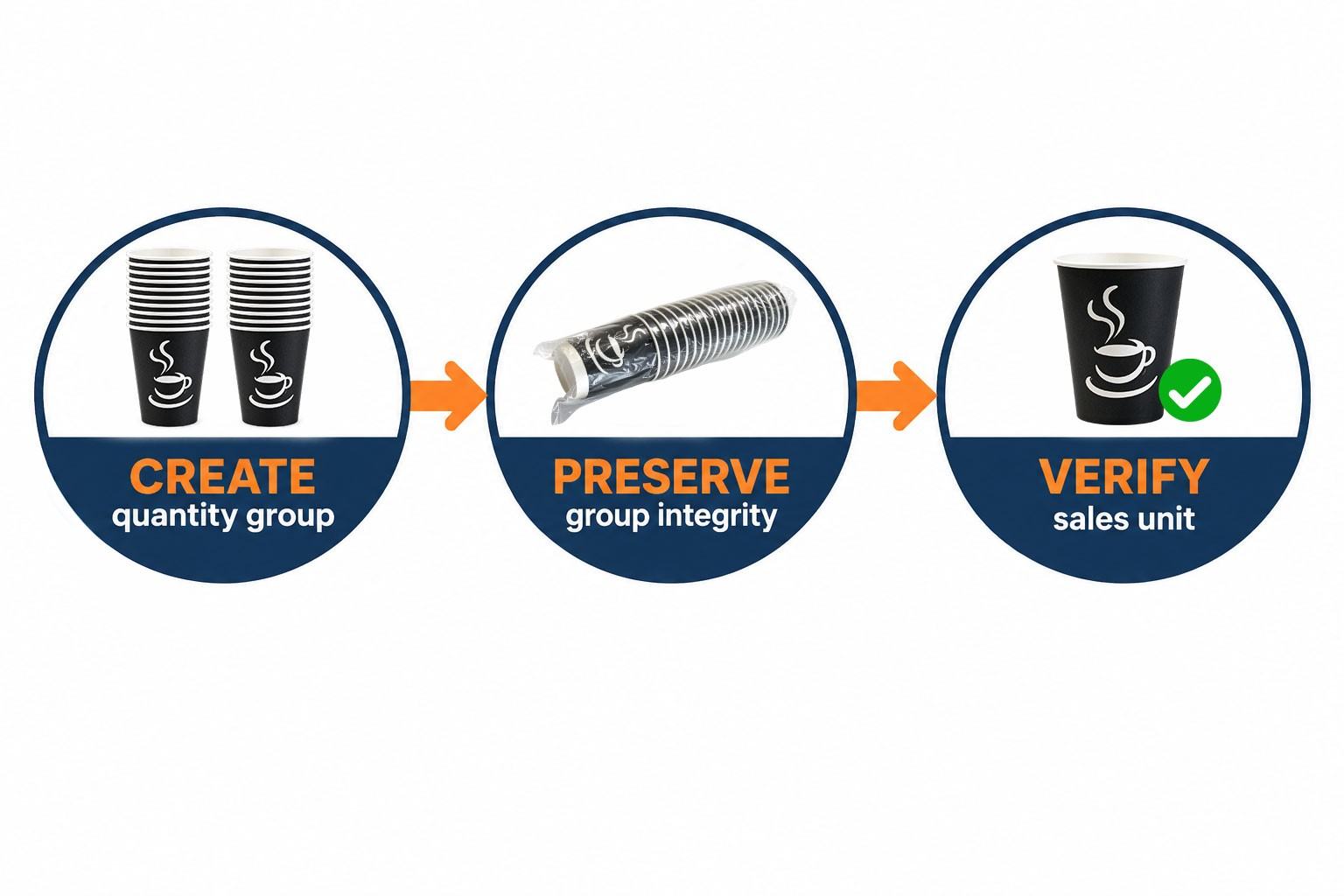
Control principle: the counter creates a quantity group; the packing process must preserve that group; the quality record must verify that the declared sales unit matches it.
When evaluating a complete paper cup packing machine setup, ask where the count is generated, where the group can be disturbed, how an incomplete cycle is handled, and how operators identify the first valid pack after a restart.
Five control points from cup to carton
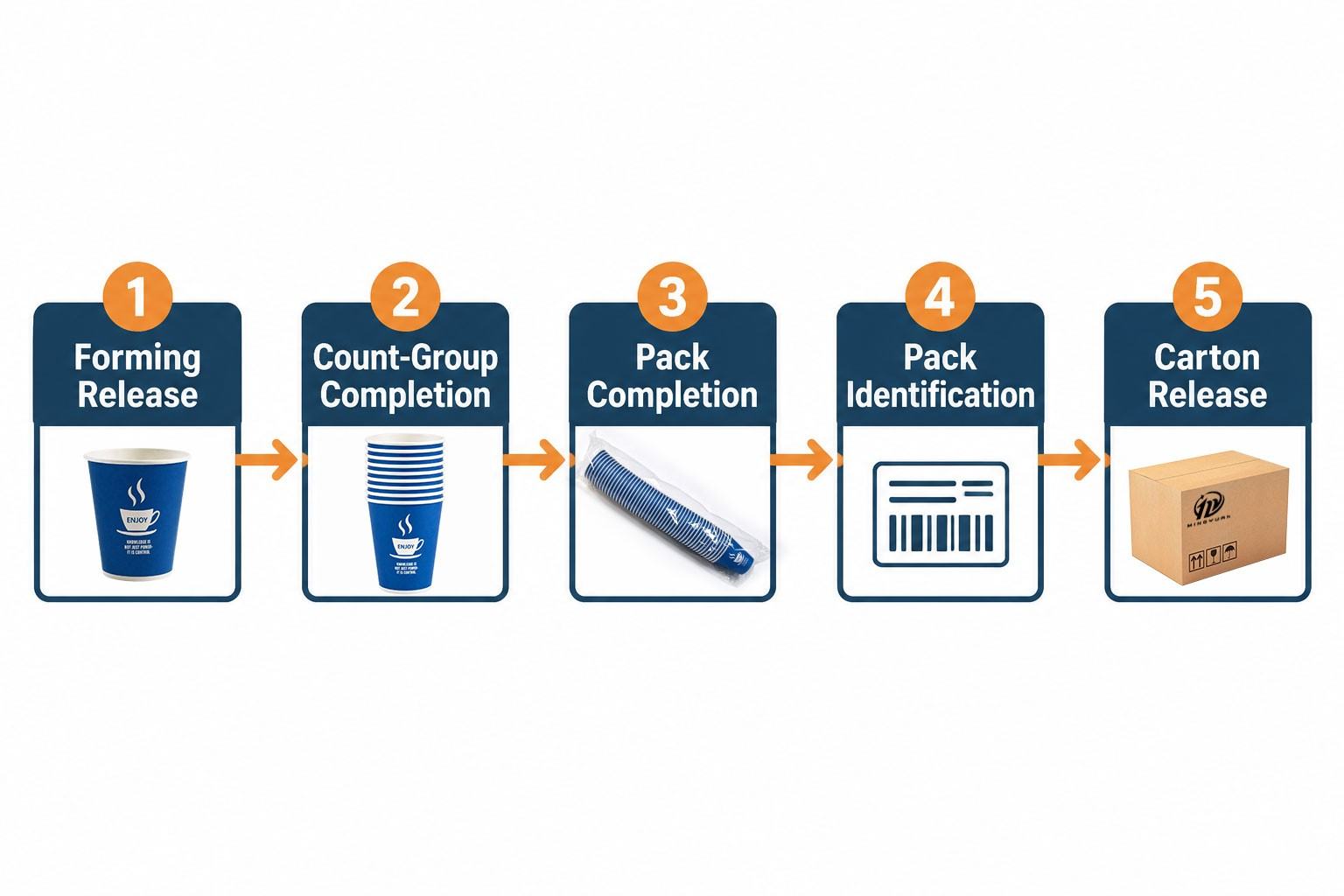
A reliable paper cup packing line treats quantity as a chain of custody. Each control point has a clear input, output, and exception rule. This makes errors easier to isolate than a single end-of-shift total.
- Forming release: only accepted cups enter the counting flow; inspection rejects and setup cups have separate containers.
- Count-group completion: the machine reaches the approved setpoint and marks or transfers one complete group.
- Pack completion: the group enters one bag or wrapping unit without manual additions, removals, or mixing.
- Pack identification: the label, cup size, design, quantity, and batch information agree before the pack enters a carton.
- Carton release: the number of verified packs multiplied by cups per pack matches the carton declaration.
If a stop occurs between two control points, the affected cups or pack should move to a clearly defined hold area. Returning them to the running line without a recount turns a visible interruption into an invisible quantity risk.
Which order patterns need stronger counting control
Not every factory needs the same automation level. The value of a paper cup counting machine increases when pack counts are contractual, labor checking is expensive, or many packs move through the line before an error is noticed.
| Order pattern | Main counting risk | Useful control priority |
|---|
| One stable cup size and one pack count | Long runs can spread one unnoticed setting or feed problem across many packs | Startup verification plus scheduled in-process pack checks |
| Frequent cup-size changes | Old settings, residual cups, mixed labels, or an unverified first pack | Line clearance and first-pack release after every change |
| Multiple pack counts for the same cup | Correct cup placed into the wrong sales configuration | Recipe, label, bag, and carton confirmation as one changeover |
| Custom printed promotional orders | Small batches and artwork changes increase mixing and leftover risk | Batch segregation and exact order-balance reconciliation |
A factory with low daily volume but many customized orders may need stronger procedural control than a higher-volume factory running one standard SKU. Volume determines capacity; variation determines how easily the wrong quantity or product can escape.
A practical quantity reconciliation formula
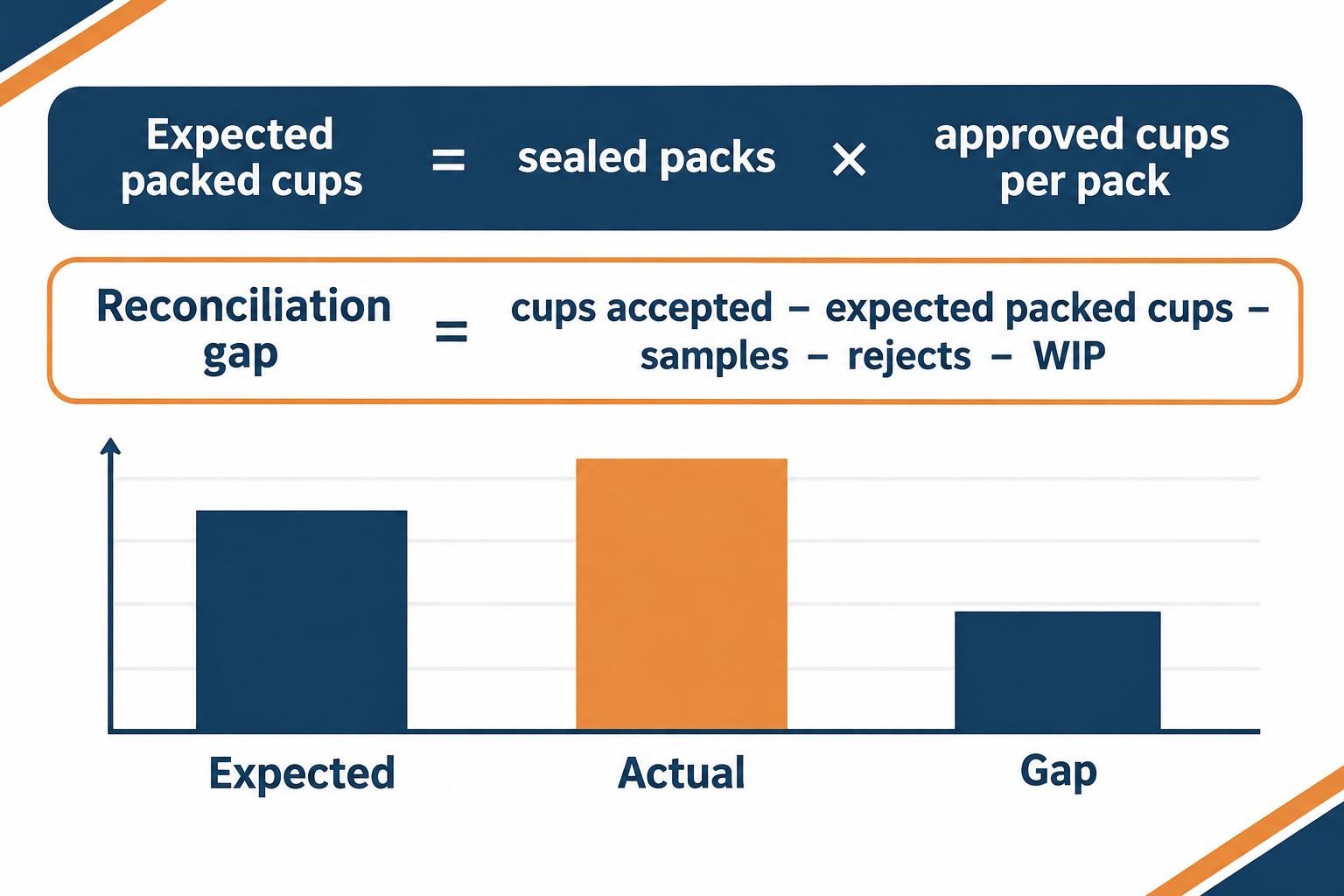
The counter total, pack total, and finished order total answer different questions. A simple reconciliation helps a supervisor confirm that the cups accepted into the counting process can be explained by finished packs and documented exceptions.
Expected packed cups = sealed packs × approved cups per pack
Reconciliation gap = cups accepted into counting − expected packed cups − recorded samples − recorded rejects − documented work in process
The figures should cover the same batch and time boundary. Mixing a counter total from one shift with carton records from another produces a meaningless result. If the gap is not zero, the batch needs investigation before release: incomplete packs, unrecorded samples, cups left inside the transfer path, rework, or a reset event may explain it.
This formula is not a substitute for direct pack verification. It is a second line of control that reveals unexplained quantity movement. The factory should define its own hold and release criteria according to customer requirements, internal quality rules, and the reliability demonstrated during validation.
Buyer rule: request an operating record that distinguishes theoretical counts, accepted cups, completed packs, rejected cups, and cartons. One large production number cannot support order-accuracy decisions.
How to validate the actual cups and pack format
A demonstration with one convenient cup is not enough when the buyer plans several cup sizes or materials. Counting behavior can change with rim shape, static, nesting tightness, surface friction, deformation, and the way cups arrive from the forming machine. Validation should use representative cups from the intended production range.
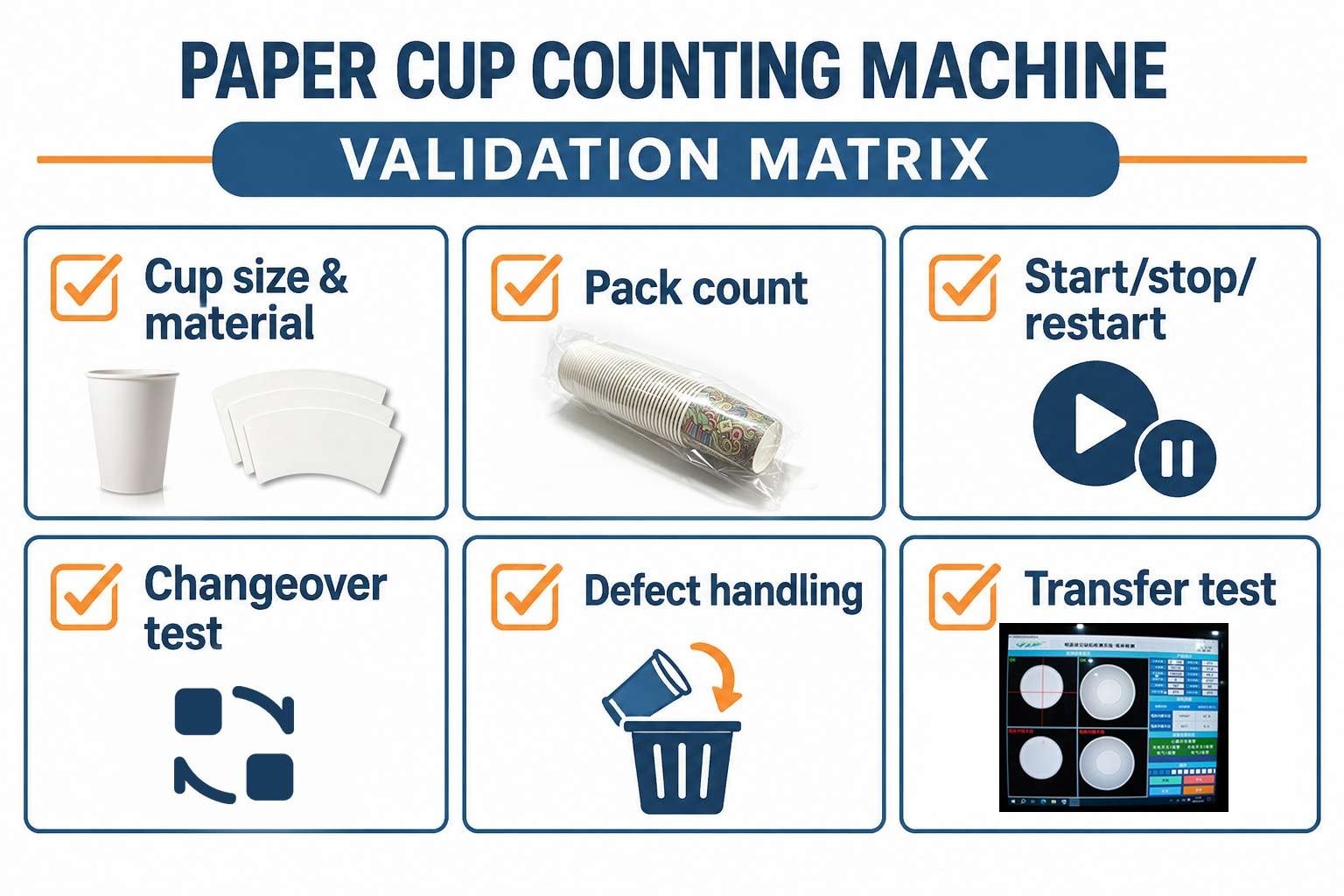
Build a sample matrix before acceptance:
- Each priority cup size and the actual paper or coating combination.
- Each commercial pack count used for that size.
- Normal start, planned stop, unexpected stop, and restart conditions.
- Changeover from the largest cup to the smallest cup and back again.
- Typical minor defects or nested-cup conditions that operators may encounter.
- Transfer into the intended paper cup bagging machine, wrapping unit, or manual packing station.
For each condition, record the machine setting, total groups produced, independently verified pack counts, interruptions, rejected groups, and operator action. The buyer and supplier can then agree on acceptance evidence using actual products instead of assuming that a catalog speed represents every SKU.
Connecting counting with bagging and sealing
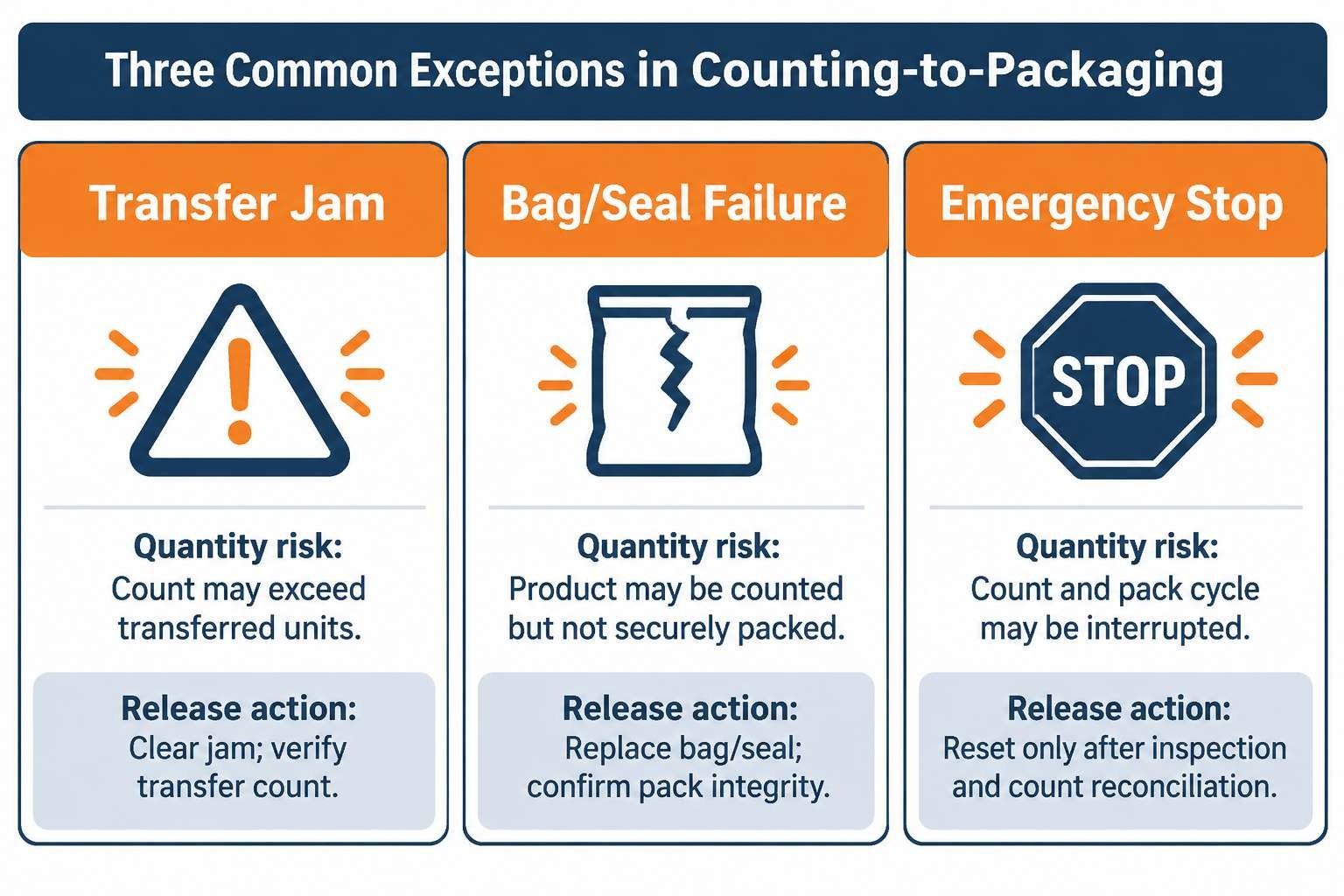
The handoff between counting and packaging deserves its own review. The counting unit may be accurate while the downstream transfer creates an incomplete bag. The automatic paper cup packing machine should therefore have a defined response when the bag film is missing, a seal is not completed, a cup group is blocked, or an operator opens the guarding after a stop.
A useful exception sequence is simple: stop the affected transfer, identify the uncertain group, move it to a recount area, clear the path, confirm the correct recipe and packaging material, and verify the first completed pack after restart. The exact controls depend on the line design, but uncertain cups should never be merged silently with the next group.
| Exception | Quantity risk | Release action |
|---|
| Transfer jam after group release | Cups may split between two packs | Isolate and recount all cups in the affected zone |
| Bag or seal failure | A correct group loses its pack identity | Recount before repacking; do not assume the loose group is complete |
| Emergency stop | Counter state and physical cups may no longer agree | Clear the uncertain zone under a documented restart rule |
Changeover rules that prevent mixed orders
Many quantity complaints begin as product-change errors. A line can count perfectly and still ship the wrong configuration when the cup, count recipe, bag, label, or carton is left from the previous job. Treat all five items as one controlled changeover.
- Finish or isolate the previous batch and record its remaining work in process.
- Remove cups, bags, labels, and cartons from the previous SKU.
- Load the new count setting and confirm the approved cups-per-pack value against the work order.
- Run the new cup through the complete counting and packaging route.
- Hold and independently verify the first completed pack and its label.
- Release normal production only after the first-pack record is signed or electronically approved.
Changing only the counter setpoint is not a complete order change. The packaging identity and physical line clearance are equally important to customer accuracy.
Buyer acceptance checklist
Use this checklist to turn a machine demonstration into an order-accuracy review:
- List the cup sizes, rim ranges, materials, and pack counts included in the purchase scope.
- Confirm how tightly nested cups and double feeds are detected or handled.
- Test what happens to the current group during a normal stop, emergency stop, jam, and restart.
- Define where uncertain cups are placed and how they are recounted.
- Verify the handoff to the intended bagging, wrapping, or manual packing process.
- Run a full SKU change including cups, recipe, bag, label, and carton.
- Agree on the independent pack-check method and the records retained for each batch.
- Compare usable verified packs per hour with forming output and carton demand.
- Train operators on exception handling, not only normal production.
The most useful acceptance result is not a short high-speed run. It is evidence that the defined cup range can be counted, packed, stopped, restarted, changed over, and reconciled without losing product identity or quantity control.
Frequently asked questions
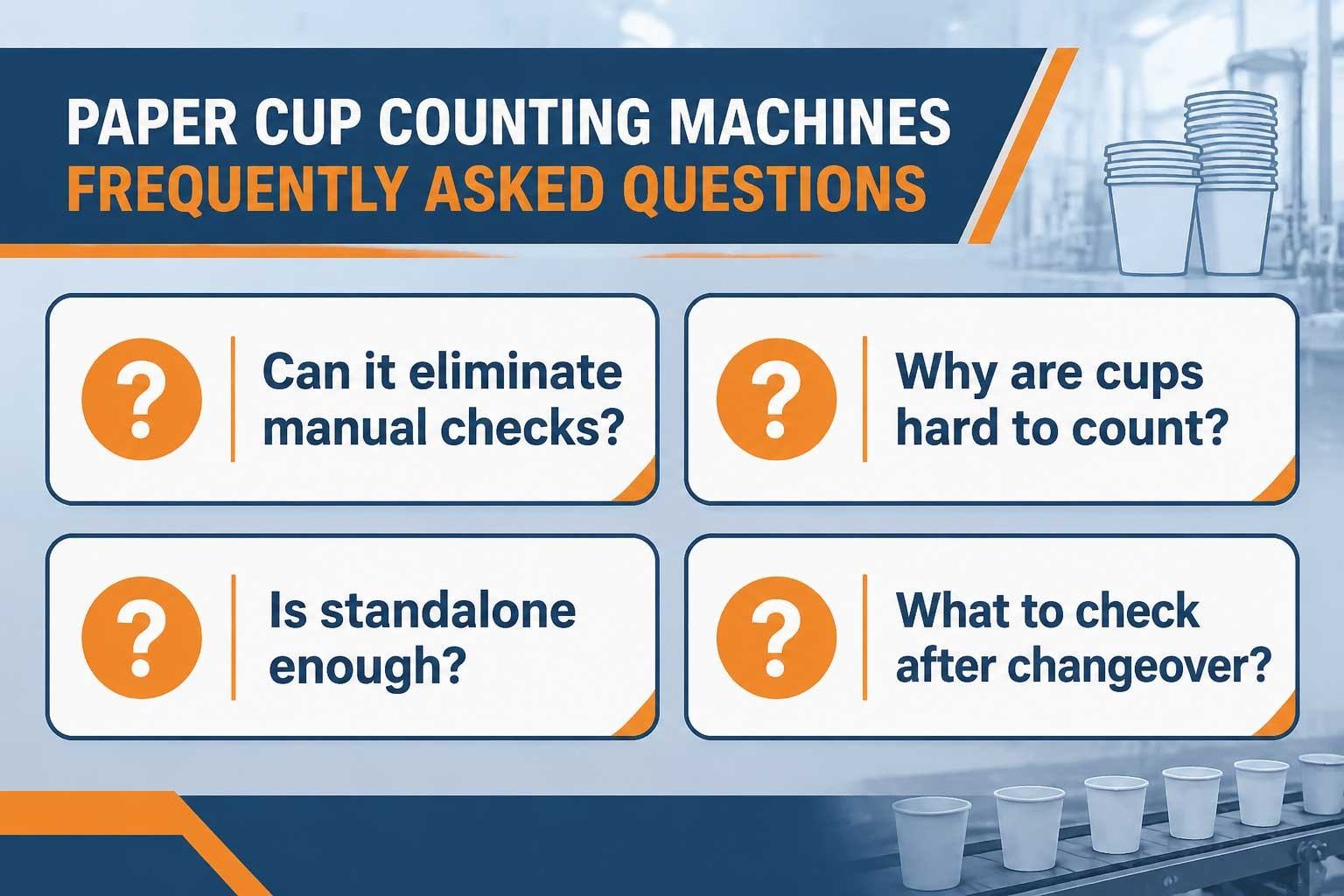
Can a paper cup counting machine eliminate all manual checks?
No. Independent verification is still needed to confirm the finished pack and monitor changes over time. Automation reduces repetitive counting work, while quality checks confirm that the complete process remains under control.
Why can cups be difficult to count consistently?
Cup size, rim condition, nesting tightness, static, deformation, and irregular feeding can affect separation or detection. Testing should use actual production cups rather than only ideal samples.
Is a standalone counter enough for a growing factory?
It may be enough when operators can preserve each counted group and pack volume is moderate. As order volume grows, connecting counting with a paper cup bagging machine or wider packaging system can reduce handling, but the transfer and exception rules must still be validated.
What should be checked after a cup-size change?
Confirm line clearance, physical guides, count recipe, cups per pack, bag size, label, carton specification, and the first finished pack. Do not release the new batch based only on the display setting.
Which output number should be used for production planning?
Use verified completed packs per hour for the intended SKU and pack count. Gross detected cups do not include stops, uncertain groups, bag failures, inspection holds, or changeovers.
The Bottom Line
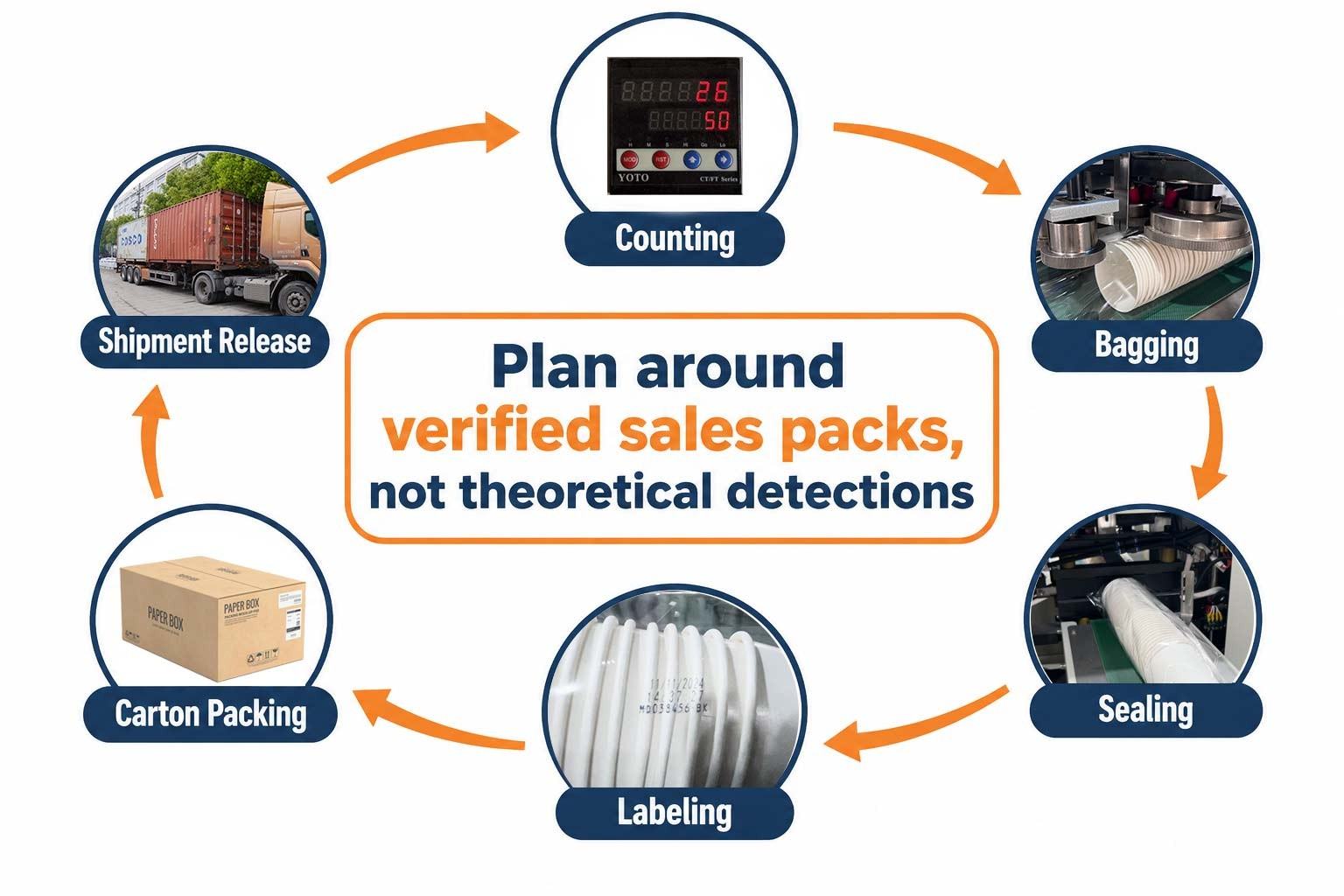
A paper cup counting machine protects customer trust only when the count remains controlled through bagging, sealing, labeling, carton packing, and shipment release. The strongest system combines verified equipment performance with line clearance, first-pack approval, exception handling, and batch reconciliation.
Plan around verified sales packs, not theoretical cup detections. Before requesting a configuration, prepare the actual cup range, pack counts, order-change pattern, downstream packing method, and acceptance matrix. This gives the supplier enough information to discuss a counting and packaging process that fits the factory's real order commitments.




 Tel: +86-19057361870 / +86 577 65567060
 Email: george@paper-cupmakingmachine.com
 MP/WhatsApp: +86-19057361870
 Manufacturer Address:No.1588, Huaming Road, Feiyun Street,Ruian City Zhejiang Province -325200 China